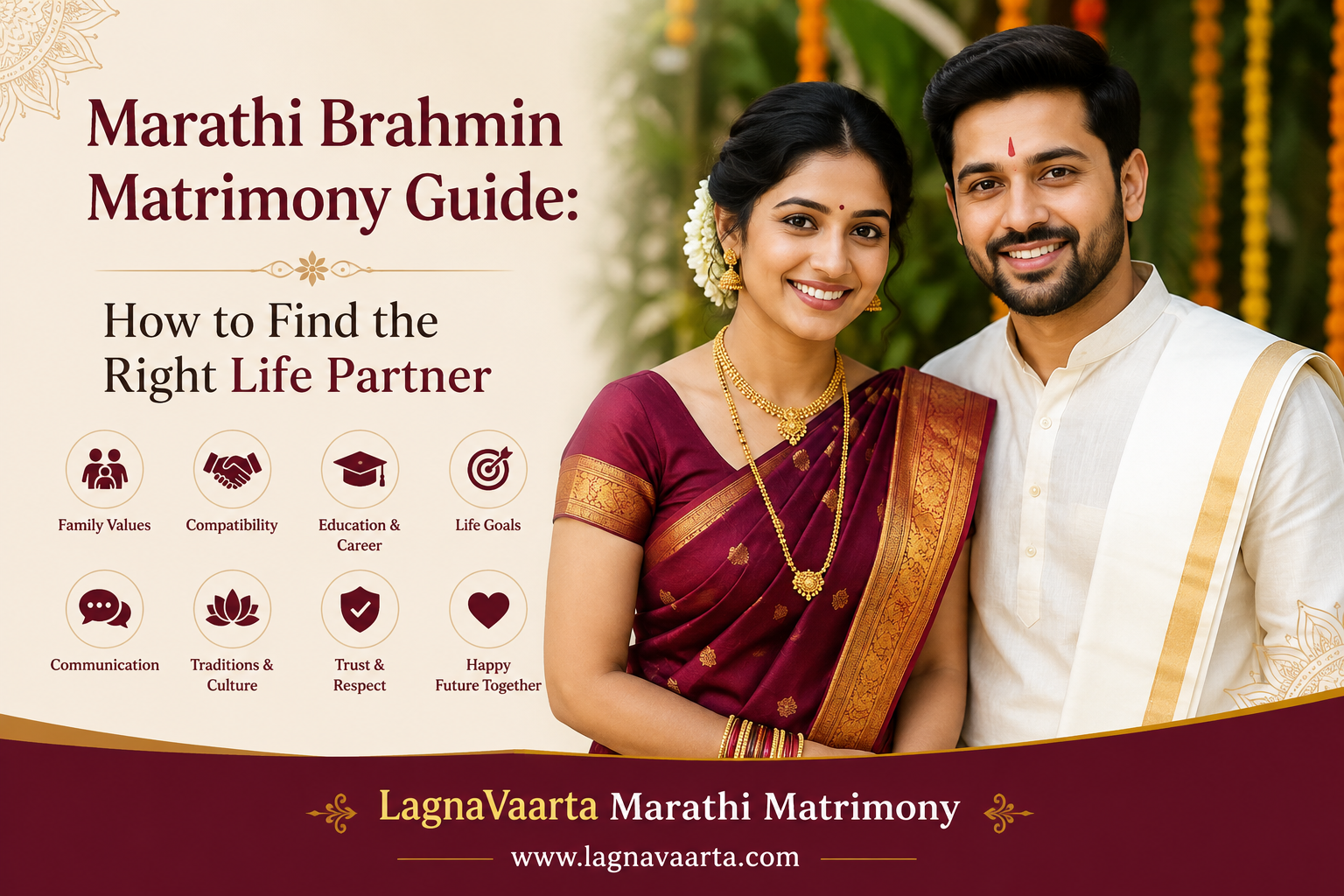
Marathi Brahmin Matrimony Guide: How to Find the Right Life Partner
Marathi Brahmin Matrimony Guide: How to Find the Right Life Partner
Finding a life partner is an important decision, and for many Marathi Brahmin families, marriage involves more than simply finding a suitable bride or groom. Family values, cultural traditions, education, career, personality, expectations, and compatibility can all play an important role.
Today, the matchmaking process has changed significantly. Families can explore profiles online, communicate directly, and understand compatibility before taking the relationship forward.
This guide explains what families and individuals should consider while looking for a Marathi Brahmin matrimonial match.
Understanding Marathi Brahmin Matrimony
Marathi Brahmin communities have a rich cultural heritage with different family traditions, regional backgrounds, and community practices.
While these traditions can be important, a successful marriage ultimately depends on mutual understanding and compatibility between two individuals.
A matrimonial profile should therefore provide more than basic biodata. It should help a potential match understand the person's education, profession, personality, family background, interests, expectations, and future goals.
1. Look Beyond Education and Profession
Education and career are important factors, but they should not be the only criteria.
Consider:
- Personality and communication style
- Career ambitions
- Lifestyle preferences
- Financial approach
- Social habits
- Long-term goals
- Expectations from married life
A highly qualified person may still have completely different expectations from yours. Compatibility deserves equal attention.
2. Discuss Family Expectations Early
Family relationships can become an important part of married life.
Before finalizing a match, discuss expectations regarding:
- Living with parents or separately
- Responsibilities toward both families
- Festivals and family traditions
- Frequency of family visits
- Financial responsibilities
- Important cultural practices
Clear conversations can help both families understand each other's expectations.
3. Talk About Career and Location
Modern Marathi families often have professionals working across cities and countries.
A potential match may be based in Pune, Mumbai, Nagpur, Nashik, Bengaluru, Hyderabad, Indore, or another city.
Therefore, couples should discuss:
Where do we want to live after marriage?
Also discuss relocation, career opportunities, work-from-home arrangements, and whether both partners want to continue working after marriage.
4. Understand Compatibility
Compatibility is not about finding someone exactly like you.
Two people can have different personalities and interests while still having a strong relationship if they respect each other's differences.
Important areas include:
- Communication
- Emotional understanding
- Lifestyle
- Financial habits
- Family values
- Personal boundaries
- Future plans
5. Take Time Before Making a Decision
A matrimonial profile is only the beginning of the process.
Once both sides show interest, spend enough time talking and understanding each other.
Discuss everyday life, expectations, ambitions, responsibilities, and even topics that may feel uncomfortable.
A thoughtful decision is better than a rushed decision.
6. Verify Important Information
Online matrimony makes it easier to discover potential matches, but basic verification is still important.
Before finalizing a proposal, families can independently verify relevant details such as education, employment, family information, and other important claims.
The goal is not unnecessary suspicion—it is simply to make an informed decision.
7. Don't Ignore Personality
A biodata can tell you someone's age, education, profession, height, and family background.
It cannot completely tell you whether two people will communicate well, respect each other, or enjoy spending time together.
Pay attention to how the person communicates and treats others.
Character is often more important than a perfect biodata.
Why Choose an Online Marathi Matrimony Platform?
Online matrimonial platforms allow individuals and families to explore profiles according to their preferences without depending entirely on traditional matchmaking networks.
For Marathi families, a focused platform can make it easier to discover people who understand Marathi culture, family traditions, and matrimonial expectations.
LagnaVaarta Marathi Matrimony provides a platform for individuals and families looking for Marathi matrimonial connections.
Final Word
The right Marathi Brahmin matrimonial match is not necessarily the person with the most impressive biodata.
The better match is someone with whom you can build a relationship based on respect, trust, communication, compatibility, and shared future goals.
Take time to understand the person, discuss important expectations openly, involve families at the right stage, and make the final decision thoughtfully.
A good marriage begins with the right conversation—not just the right biodata.
